Buy the GCP R3 course & get a FREE eBook— your complete ICH-GCP R3 reference guide. Book Now →

  • Preclinical & Laboratory Foundations Learning Path
  • Phase I – First-in-Human Trials Learning Path
  • Phase II & III – Efficacy & Pivotal Trials Learning Path
  • Clinical Trials Foundation PathNew
  • Regulatory Submission & Approval

About

US FDA Medical Device Pathways: 510(k), De Novo, PMA and the QMSR Transition training provides the knowledge and practical skills required to understand, navigate, and support US FDA medical device regulatory pathways and quality requirements. Learners gain an understanding of the regulatory, clinical, quality, and compliance principles that support appropriate pathway selection, effective submissions, market access, and ongoing FDA compliance.
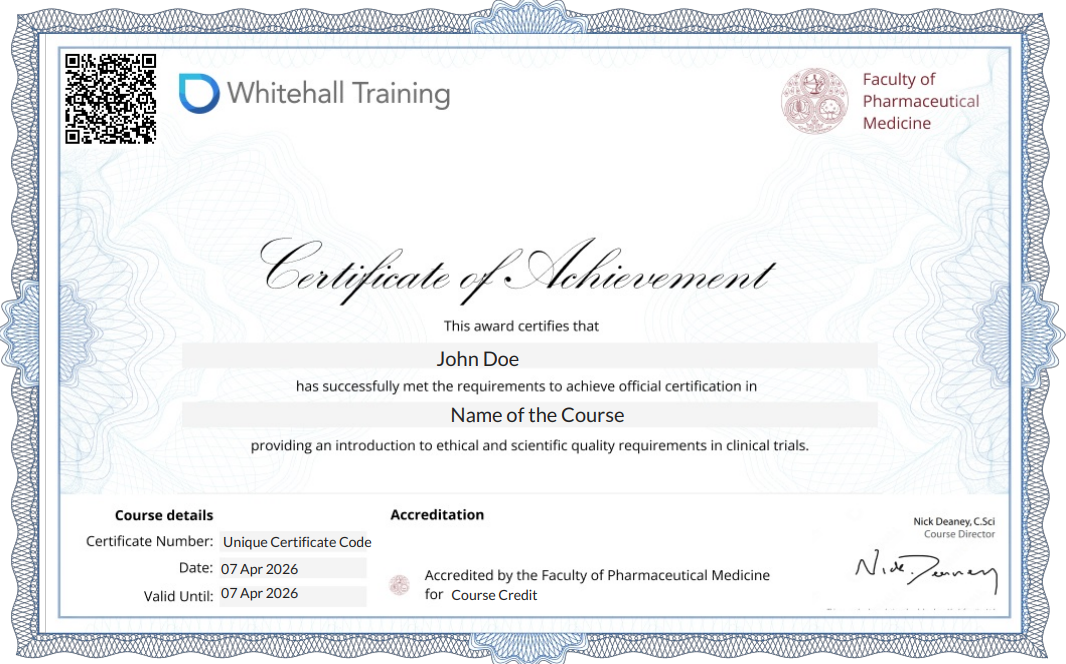
This US FDA Medical Device Pathways Course & Certification covers device classification, product codes, predicate selection, 510(k), De Novo, PMA, HDE and investigational pathways, Q-Submissions, clinical and non-clinical evidence, medical device software, cybersecurity, QMSR, ISO 13485, risk management, design controls, CAPA, registration and listing, postmarket reporting, field actions, recalls, and FDA inspections. Upon successful completion, learners receive a certification demonstrating their understanding of FDA medical device pathways, quality system requirements, regulatory submissions, market access, and postmarket compliance.

Who Should Enrol?

  • Regulatory Affairs and Medical Device Compliance Professionals
  • Quality Assurance and Quality Management Professionals
  • Medical Device Manufacturers and Product Development Teams
  • Clinical, Regulatory, and R&D Professionals
  • Consultants, CROs, and Life Sciences Professionals
  • FDA Compliance, QMS, and Inspection Readiness Professionals
📢 Every purchase also includes our FREE companion US FDA Medical Device Pathways: 510(k), De Novo, PMA and the QMSR Transition eBook, designed to help you apply principles in real-world clinical trial practices.

What you will learn

Understand the principles of US FDA medical device regulation, including device classification, risk-based controls, regulatory strategy, and the requirements that influence market access.

Learn how to navigate the 510(k), De Novo, PMA, HDE, and investigational pathways, including predicate selection, substantial equivalence, evidence requirements, FDA review, and pathway-specific expectations.

Develop practical approaches for preparing FDA submissions, managing Q-Submissions, clinical and non-clinical evidence, software, cybersecurity, and regulatory interactions throughout device development.

Gain understanding of FDA QMSR and ISO 13485 requirements, including quality management, risk management, design controls, CAPA, supplier controls, registration and listing, postmarket reporting, field actions, recalls, and inspection readiness.

Course Syllabus

  1. Why US device regulation is a different instrument, not a translation
  2. What changed on 2 February 2026, and why it has your name on it
  3. Who this course is for and what you will be able to do
  4. The running case study: Verrand Medical B.V.
  5. Five things to unlearn: no notified body, no certificate, no ninety-day plan
  6. Cleared, granted, approved and authorised — using the right verb
  7. Scope, boundaries and points to verify before you rely on this

  1. The FD&C Act, CDRH and how US device law is structured
  2. Classification: 21 CFR Parts 862 to 892, regulation numbers and product codes
  3. Finding your classification and mapping the predicate landscape
  4. 510(k)-exempt devices and the limitations of exemption
  5. Class I reserved devices as a carve-out from a statutory exemption
  6. What exemption does not remove: registration, listing, QMSR, labelling, UDI, reporting
  7. In vitro diagnostics and the categories that defeat low-risk assumptions
  8. Case study, knowledge checks and key takeaways

  1. Substantial equivalence and what FDA is actually deciding
  2. Choosing and qualifying a predicate, and what disqualifies one
  3. Intended use versus indications for use
  4. The substantial equivalence decision tree
  5. Traditional, Abbreviated and Special 510(k), and when Special is unavailable
  6. eSTAR, technical screening and the end of Refuse to Accept for most submissions
  7. Additional Information requests and the 180-day hold
  8. FDA Days versus total time to decision, and MDUFA fees by fiscal year

  1. De Novo: when it applies, and the repealed thirty-day rule still being taught
  2. Special controls, the classification order and becoming a future predicate
  3. Premarket approval: original, modular and the supplement family
  4. The pre-approval inspection and post-approval studies
  5. Humanitarian Device Exemption and the Product Development Protocol
  6. Investigational device exemptions, significant risk and non-significant risk
  7. Breakthrough Devices, the Safer Technologies Program and TAP
  8. Case study, knowledge checks and key takeaways

  1. The Q-Submission Program and its request types
  2. What Pre-Submission feedback does and does not commit FDA to
  3. Agreement and Determination Meetings, where you need certainty
  4. Recognised consensus standards and the declaration of conformity
  5. Clinical evidence: when FDA needs it and when it does not
  6. Software as a medical device and documentation levels
  7. Section 524B cyber devices, the software bill of materials and patch cadence
  8. Predetermined change control plans, and why the EU has no equivalent

  1. The final rule, the technical amendments and a single effective date
  2. Incorporation of ISO 13485:2016 by reference, and what that means in practice
  3. The new shape of Part 820: scope, definitions, 820.10, 820.35 and 820.45
  4. Control of records, complaint records and servicing records
  5. Device labelling and packaging controls
  6. Terminology: the design history file, device master record and device history record
  7. What the QMSR does not do
  8. Citation hygiene and the sections that no longer exist

  1. The end of the record exemption and what FDA can now read
  2. Internal audit reports, management review and supplier audits
  3. Risk management: why a cross-reference to ISO 14971 is not an answer
  4. Complaints, returned goods and the investigation duty
  5. Design controls and design change control across two jurisdictions
  6. Purchasing and supplier controls
  7. Inspection under Compliance Program 7382.850, Form FDA 483 and what follows
  8. MDSAP: what it substitutes for and what it does not

  1. Establishment registration and device listing
  2. The annual fee, the October to December window and the fee year trap
  3. US agent, initial importer and EU authorised representative are three different jobs
  4. Import: entry review, detention, refusal and import alerts
  5. Labelling under Part 801 and the prescription device exemption
  6. In vitro diagnostic labelling under Part 809
  7. Unique device identification and GUDID submission
  8. Where EU MDR and FDA labelling genuinely diverge

  1. Medical device reporting under Part 803
  2. The thirty-day, five-work-day and ten-working-day clocks
  3. The malfunction report that has no EU equivalent
  4. Becoming aware, and why the clock starts earlier than you think
  5. Electronic reporting, and the public record your first report creates
  6. Corrections and removals, recalls, and who classifies them
  7. Postmarket surveillance orders under section 522
  8. The enforcement ladder and what each step means commercially

  1. The five things most likely to cost you money
  2. Turning the course into a ninety-day plan
  3. The templates to use, and in what order
  4. What this course does not tell you, and what to verify
  5. Ten things to take back to work
  6. Course completion

  1. 📘 Bonus: US FDA Medical Device Pathways: 510(k), De Novo, PMA and the QMSR Transition eBook (Free with purchase)

Our Certified Customers

novartis
NHS
takeda
roche
baxter

Learner Rating & Reviews

4.7
★★★★★★
Average Rating
536 global ratings
★★★★★
87.0%
★★★★★
5.0%
★★★★★
3.0%
★★★★★
3.0%
★★★★★
2.0%
RC

Working with Whitehall training for the last two years of partnership has been a very successful experience – I have fast access to all the GCP course...

SM

I have finalised the demo for the ICH-GCP E6 R3 refresher course. Overall, I liked the content and the interface. I also want to thank Whitehall Train...

Frequently Asked Questions

  • Regulatory Affairs, Medical Device Compliance & Quality Professionals
  • Medical Device Manufacturers, Product Development & Engineering Teams
  • Clinical Research, Clinical Affairs & Regulatory Strategy Professionals
  • Quality Assurance, QMS & FDA Inspection Readiness Teams
  • Pharmaceutical, Biotechnology & Life Sciences Professionals
  • Consultants, CROs, Sponsors & Medical Device Regulatory Professionals

This module builds a foundational understanding of US FDA medical device regulatory pathways, focusing on device classification, regulatory strategy, market access, and quality system requirements. This module covers 510(k), De Novo, PMA, HDE and investigational pathways, predicate selection, FDA submissions, Q-Submissions, clinical evidence, software and cybersecurity, QMSR, ISO 13485, and postmarket compliance to support effective regulatory planning and compliant medical device development.

  • Developed by medical device regulatory, quality, clinical, and FDA compliance experts
  • Practical, real-world focus aligned with US FDA medical device regulatory and quality system expectations
  • Covers device classification, 510(k), De Novo, PMA, HDE, Q-Submissions, QMSR, ISO 13485, and postmarket requirements
  • Suitable for professionals across medical devices, pharmaceuticals, biotechnology, CROs, and life sciences
  • Designed to support effective regulatory strategy, compliant market access, QMS implementation, FDA inspections, and postmarket compliance