













ICH GCP R3 is now in English & EU languages. Book Now

About

The ISO 14971:2019 Risk Management for Medical Devices course provides a comprehensive overview of the international standard for identifying, evaluating, controlling, and monitoring risks associated with medical devices. It covers key requirements including risk management planning, hazard identification, risk analysis, evaluation, and control. The course explains concepts such as residual risk, benefit-risk analysis, and lifecycle risk management. Designed for industry professionals, it supports regulatory compliance and ensures product safety and effectiveness.

Course Syllabus

  1. Understanding Risk in Medical Devices
  2. Hazard, Harm & Risk: Worked Example
  3. Introduction to the 5×5 Risk Matrix
  4. The 5×5 Matrix: Probability Scale
  5. The 5×5 Matrix: Severity Scale
  6. Reading and Interpreting the 5×5 Matrix
  7. Case Study: 5×5 Matrix in Practice
  8. Risk Acceptability Criteria
  9. What Is a Risk Management Policy?
  10. Key Elements of a Risk Management Policy
  11. Building Your Risk Management Policy
  12. Risk Mitigation: Overview
  13. Hierarchy of Risk Controls (ISO 14971 Clause 6.2)

  1. The ISO 14971 Risk Management Process
  2. Stage 1: Risk Analysis (ISO 14971 Clause 4)
  3. Identifying Hazards and Hazardous Situations
  4. Stage 2: Risk Evaluation (ISO 14971 Clause 5)
  5. Stage 3: Risk Control (ISO 14971 Clause 6)
  6. Stage 4: Residual Risk Evaluation (Clause 7)
  7. What Is a Risk Management Plan?
  8. Key Elements of a Risk Management Plan
  9. RMP: Responsibilities & Roles
  10. RMP: Criteria for Risk Acceptability
  11. The Risk Management File
  12. Verification Activities in Risk Management
  13. Post-Market Feedback & Risk Management
  14. RMP: Scope Definition
  15. Stage 5: Risk Management Report Overview

  1. What Is FMEA?
  2. Types of FMEA Used in Medical Devices
  3. FMEA: Key Components
  4. FMEA: Step-by-Step Process
  5. FMEA: Severity Rating Scale
  6. FMEA: Occurrence Rating Scale
  7. FMEA: Detection Rating Scale
  8. Risk Priority Number (RPN)
  9. FMEA Worksheet Structure
  10. Design FMEA (dFMEA)
  11. Process FMEA (pFMEA)
  12. Case Study: FMEA for an Infusion Pump
  13. FMEA: Best Practices
  14. Integrating FMEA into the ISO 14971 Framework

  1. Risk-Benefit Analysis: Introduction
  2. Risk-Benefit Analysis Process
  3. Assessing Overall Residual Risk
  4. Risk Management in Production Activities
  5. Post-Production Activities & Risk Management
  6. Post-Market Surveillance System
  7. Risk Management and the Quality Management System
  8. How Risk Management Impacts QMS
  9. Components of a Risk Management Report
  10. Writing an Effective Risk Management Report
  11. Risk Traceability Matrix

  1. Key Takeaways
  2. Course Summary
  3. GLOSSARY
  4. Glossary of Key Terms (A–R)
  5. Glossary of Key Terms (R–Z)
  6. Completion slide

Our Certified Customers

novartis
NHS
takeda
roche
baxter

Learner Rating & Reviews

4.7
Average Rating
536 global ratings
87.0%
5.0%
3.0%
3.0%
2.0%
RC

Working with Whitehall training for the last two years of partnership has been a very successful experience – I have fast access to all the GCP course...

SM

I have finalised the demo for the ICH-GCP E6 R3 refresher course. Overall, I liked the content and the interface. I also want to thank Whitehall Train...

Frequently Asked Questions

The Risk Management for Medical Devices ISO 14971:2019 course provides a comprehensive foundation for understanding the international standard for risk management in medical devices. It covers the entire product lifecycle, including risk management planning, hazard identification, risk analysis, evaluation, and implementation of risk control measures. Key focus areas include inherently safe design, protective measures, information for safety, residual risk evaluation, and benefit-risk analysis. The course emphasizes the creation and maintenance of the risk management file, post-production information collection, and continuous risk monitoring. Aligned with global regulatory expectations, it equips professionals with practical knowledge to ensure product safety, regulatory compliance, and effective risk management throughout the device lifecycle.

  • Overview of ISO 14971:2019 risk management framework for medical devices
  • Risk management planning and development of a risk management plan
  • Hazard identification, risk analysis, and risk evaluation methodologies
  • Implementation of risk control measures: inherently safe design, protective measures, and information for safety
  • Residual risk evaluation and benefit-risk analysis
  • Risk management file structure and documentation requirements
  • Post-production information collection and continuous risk monitoring
  • Regulatory expectations and integration of risk management across the product lifecycle

This course is ideal for professionals involved in the design, development, risk management, and regulatory compliance of medical devices, including:


  • Regulatory Affairs and Quality Assurance professionals
  • Risk management and product safety specialists
  • Design and development engineers
  • Clinical, safety, and post-market surveillance teams
  • Consultants and professionals working with notified bodies
  • Anyone seeking to understand ISO 14971:2019 requirements for medical device risk management
No prior ISO 14971 experience is required, but a basic understanding of medical devices or quality management systems is beneficial.

  • Comprehensive coverage of ISO 14971:2019 requirements for medical device risk management
  • Clear understanding of risk analysis, evaluation, control, and lifecycle risk management
  • Practical guidance on implementing effective risk control measures and documentation
  • Insights into residual risk evaluation and benefit-risk analysis
  • Supports regulatory compliance and audit readiness across global markets
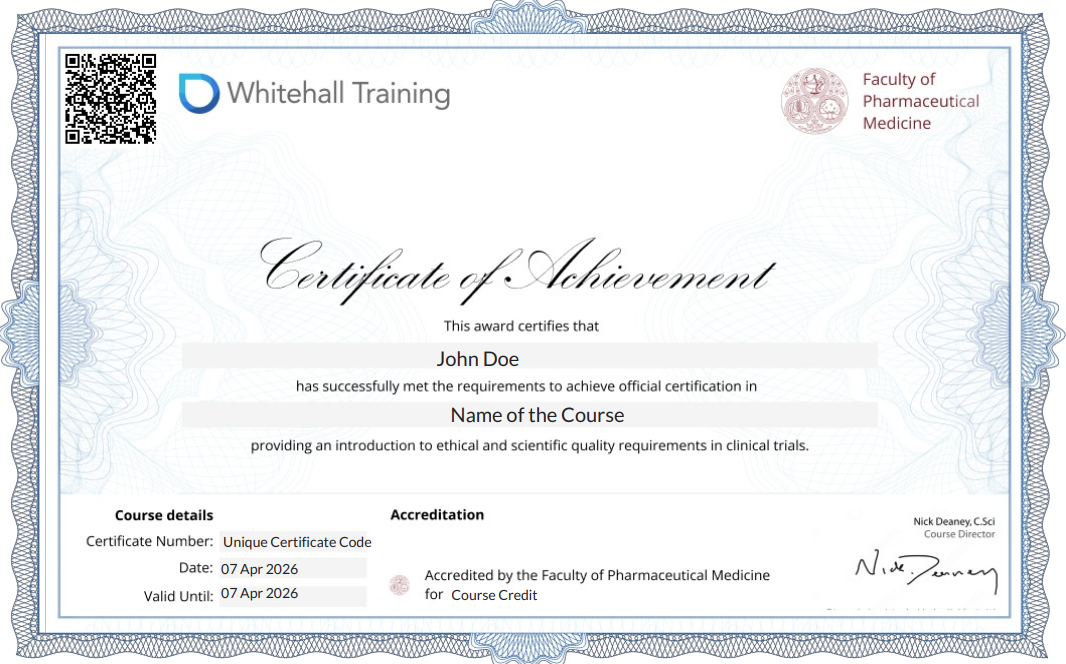
  • Certificate issued upon successful completion