















SM
Clara Fargo
EBMT Clinical Research Quality Assurance Coordinator
I have finalised the demo for the ICH-GCP E6 R3 refresher course. Overall, I liked the content and the interface. I also want to thank Whitehall Train...
 AI Clinical
 New
New
 Clinical Practice
 Pharmacovigilance
 Manufacturing
 Laboratory Practice
 Distribution
 Medical Devices
 Regulatory Affairs
 Research Compliance
 Health & Safety
 Quality Assurance
 Biostatistics
 Trending
 Pharmaceutical MedicineNew
 All Bundles








 New
New 96% Recommended
 Updated 2026
 3 hours
 182 active users
 2 points
Your Study Basket
1 x Clinical Research Associate – Oncology Practitioner
| Total | |



Secure Payment Service

Rest assured we use secure processes to protect your payment.
Secured by:




The Clinical Research Associate – Oncology Practitioner Course is designed to provide specialized knowledge in monitoring and managing oncology clinical trials. It focuses on the unique complexities of cancer studies, including advanced protocols, patient safety considerations, and regulatory requirements specific to oncology research.,
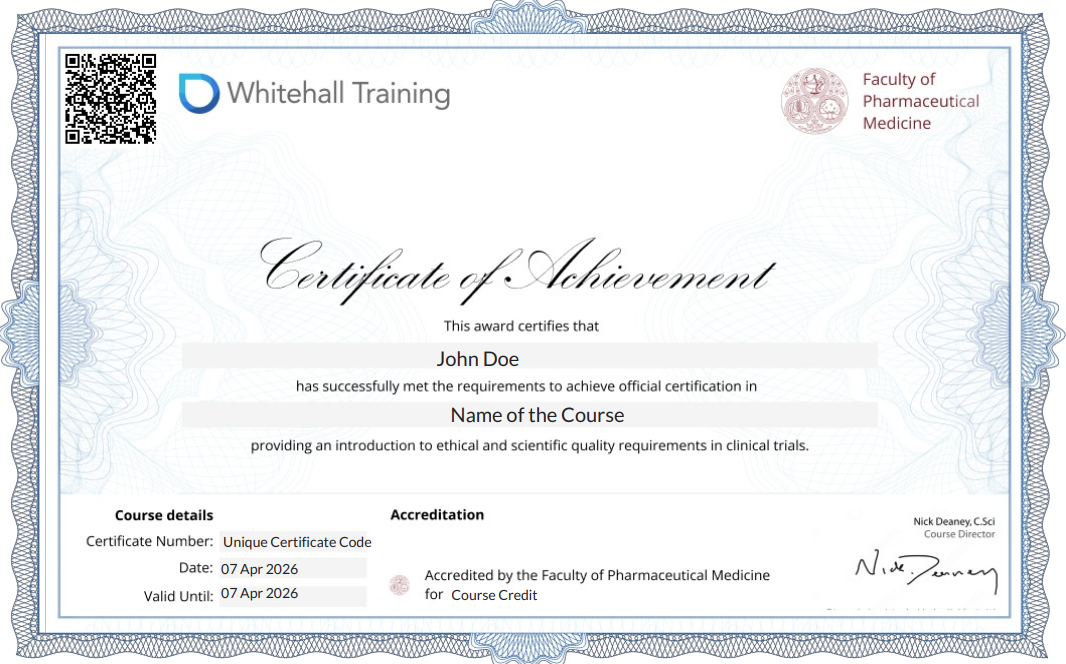
This course covers oncology trial conduct, protocol compliance, safety reporting of oncology-specific adverse events, site monitoring, informed consent, and risk-based quality management. It also emphasizes Good Clinical Practice (GCP), communication with investigators, and inspection readiness in oncology trials. Upon completion, learners receive a certification demonstrating competency in oncology clinical trial monitoring.
Understand the role of an Oncology CRA, including end-to-end clinical trial workflows, stakeholder management, and how oncology trials differ from other therapeutic areas.
Gain foundational knowledge of cancer biology, tumour classification, staging systems, and oncology treatment modalities to support accurate protocol understanding and site oversight.
Learn oncology-specific clinical trial design and endpoints, including RECIST criteria, survival and response measures, safety assessment, and dose modification principles.
Develop expertise in oncology trial operations such as site monitoring, data review, regulatory compliance, risk-based monitoring, audit readiness, and complex clinical decision-making scenarios.








 Best Seller