













SM
Clara Fargo
EBMT Clinical Research Quality Assurance Coordinator
I have finalised the demo for the ICH-GCP E6 R3 refresher course. Overall, I liked the content and the interface. I also want to thank Whitehall Train...
 AI Clinical
 New
New
 Clinical Practice
 Pharmacovigilance
 Manufacturing
 Laboratory Practice
 Distribution
 Medical Devices
 Regulatory Affairs
 Research Compliance
 Health & Safety
 Quality Assurance
 Biostatistics
 Trending
 Pharmaceutical MedicineNew
 All Bundles






 New
New 97% Recommended
 Updated 2025
 19 hours
 223 active users
 19 points
If you'd like to swap a course or add additional courses, Customize Your Bundle — or reach out to us and we'll tailor a learning path to your training needs.
Your Study Basket
1 x Pharmacovigilance & Drug Safety Learning Path
| Total | |


Secure Payment Service

Rest assured we use secure processes to protect your payment.
Secured by:




The Pharmacovigilance & Drug Safety Learning Path is designed to provide comprehensive training on the core processes, regulatory expectations, and operational activities involved in modern pharmacovigilance and drug safety management. Covering essential topics such as adverse event reporting, case handling, signal detection and risk assessment, PSUR and PBRER management, literature monitoring, and AI applications in pharmacovigilance, this programme equips professionals with the practical knowledge required to support global drug safety activities throughout the product lifecycle.
Participants will develop an understanding of pharmacovigilance systems, safety data evaluation, benefit-risk assessment, regulatory reporting requirements, and medical writing processes aligned with international standards and industry best practices. The programme also explores emerging technologies and AI-driven approaches transforming pharmacovigilance operations and safety surveillance.
How this differs from the PV Learning Path
The Pharmacovigilance & Drug Safety Learning Path is more operational and process-focused, with strong emphasis on case handling, safety reporting, literature screening, PSUR/PBRER management, and AI applications in pharmacovigilance. It is designed for professionals involved in day-to-day pharmacovigilance activities and drug safety operations.
In comparison, the broader PV Learning Path focuses more on strategic and regulatory pharmacovigilance topics such as global PV regulations, medical device vigilance, signalling and risk management, audit readiness, and overall pharmacovigilance compliance frameworks. It is more suitable for professionals seeking wider regulatory and oversight knowledge across global pharmacovigilance systems.

Understand core pharmacovigilance and drug safety principles, including adverse event reporting, case processing, and regulatory safety requirements.

Learn signal detection, risk assessment methodologies, and benefit–risk evaluation in line with global pharmacovigilance regulations.

Develop skills in preparing and managing PSUR/PBRER, literature screening, and regulatory safety reporting activities.

Gain knowledge of AI applications in pharmacovigilance and how modern technologies support drug safety surveillance and compliance.

Foundation PV course — ADR reporting, EU and FDA regulatory requirements
 4 hours
 4 points
End-to-end case handling — receipt, triage, coding, narrative writing
2 hours3 points
Signal management, disproportionality analysis, PRAC submissions
3 hours4 points
PSURs are a core PV deliverable; ICSR and PSUR timelines under EU GVP
2 hours3 points
PBRER preparation and submission requirements
2 hours3 pointsLiterature screening is a GVP Module VI obligation for MAH teams
2 hours3 points
AI is reshaping case processing and signal detection — forward-looking competency
2 hours3 points




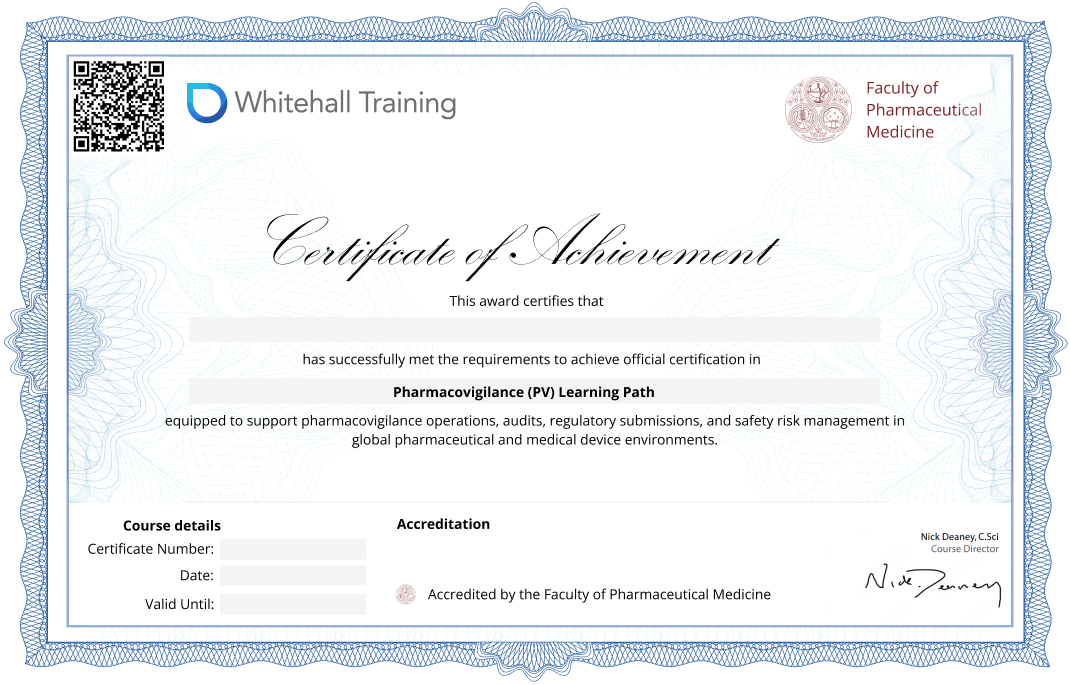
Upon completion of this learning path, participants will be able to understand and apply key pharmacovigilance and drug safety processes including adverse event case handling, signal detection and risk assessment, PSUR and PBRER management, literature screening, regulatory safety reporting, and AI-driven pharmacovigilance practices in alignment with global regulatory expectations.


 Best Seller