















SM
Clara Fargo
EBMT Clinical Research Quality Assurance Coordinator
I have finalised the demo for the ICH-GCP E6 R3 refresher course. Overall, I liked the content and the interface. I also want to thank Whitehall Train...
 AI Clinical
 New
New
 Clinical Practice
 Pharmacovigilance
 Manufacturing
 Laboratory Practice
 Distribution
 Medical Devices
 Regulatory Affairs
 Research Compliance
 Health & Safety
 Quality Assurance
 Biostatistics
 Trending
 Pharmaceutical MedicineNew
 All Bundles








 New
New 96% Recommended
 Updated 2026
 3 hours
 225 active users
 3 points
Your Study Basket
1 x Patient Recruitment, Retention and Participant Experience
| Total | |



Secure Payment Service

Rest assured we use secure processes to protect your payment.
Secured by:




Patient Recruitment, Retention and Participant Experience training provides the knowledge and practical skills required to plan, implement, and oversee effective clinical trial recruitment and retention strategies while supporting a positive, patient-centred participant experience. Learners gain an understanding of the operational, ethical, regulatory, and patient-focused principles that support timely recruitment, appropriate participant selection, informed consent, engagement, and continued participation.
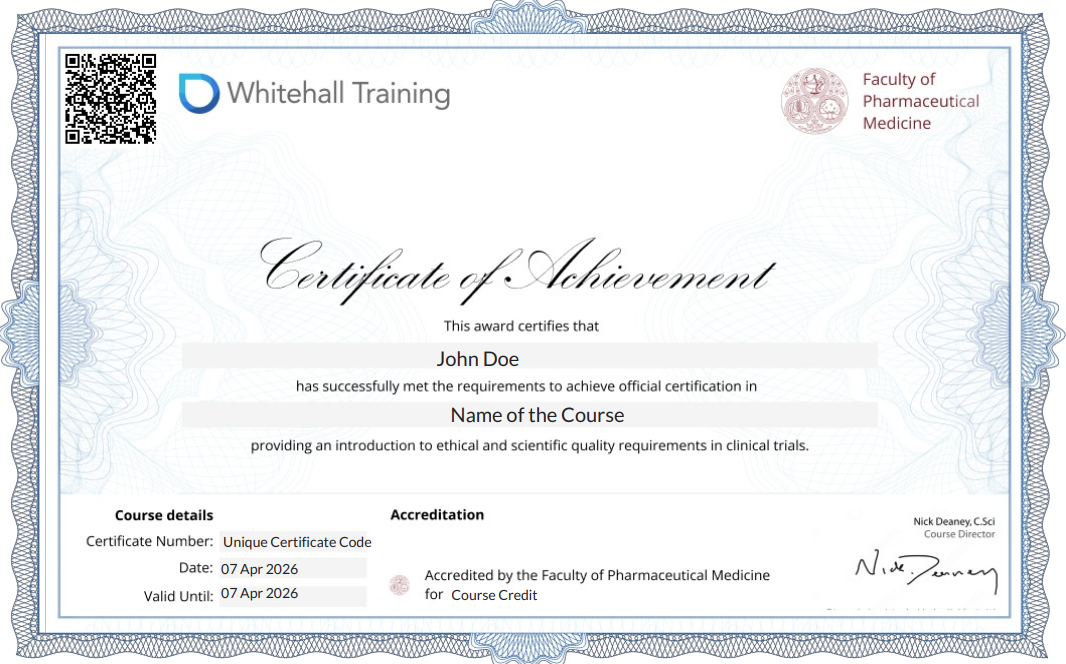
This Patient Recruitment, Retention and Participant Experience Course & Certification covers recruitment planning, feasibility assessment, participant identification, screening and eligibility, site performance, recruitment metrics, barriers to participation, informed consent, recruitment advertising, retention strategies, participant burden, communication, community engagement, digital and decentralised trial approaches, and the use of participant feedback to improve trial delivery. Upon successful completion, learners receive a certification demonstrating their understanding of effective recruitment, retention, participant engagement, and patient-centred clinical trial conduct.

Understand the principles of effective patient recruitment, retention, and participant experience in clinical trials, and their importance in achieving timely enrolment, sustained participation, and high-quality data.

Learn how to design and implement recruitment strategies by addressing participant identification, feasibility, eligibility criteria, site performance, recruitment pathways, informed consent, and barriers to participation.

Develop practical approaches to improve retention and reduce participant burden through clear communication, flexible visit models, supportive engagement, and patient-centred trial design.

Gain understanding of regulatory and ethical expectations for recruitment and participant-facing materials, including informed consent, recruitment advertising, transparency, privacy, vulnerable populations, and the use of digital and decentralised approaches.





This module builds a foundational understanding of patient recruitment, retention, and participant experience in clinical trials, focusing on effective recruitment strategies, participant engagement, reducing barriers to participation, and supporting continued trial involvement. This module covers recruitment planning, informed consent, participant-facing materials, retention strategies, patient burden, recruitment metrics, and patient-centred trial practices to support ethical, efficient, and participant-focused clinical research.


 Best Seller