















SM
Clara Fargo
EBMT Clinical Research Quality Assurance Coordinator
I have finalised the demo for the ICH-GCP E6 R3 refresher course. Overall, I liked the content and the interface. I also want to thank Whitehall Train...
 AI Clinical
 New
New
 Clinical Practice
 Pharmacovigilance
 Manufacturing
 Laboratory Practice
 Distribution
 Medical Devices
 Regulatory Affairs
 Research Compliance
 Health & Safety
 Quality Assurance
 Biostatistics
 Trending
 Pharmaceutical MedicineNew
 All Bundles





 New
New 94% Recommended
 Updated 2026
 1 hour
 194 active users
 3 points
Your Study Basket
1 x Corrective Action and Preventive Action (CAPA) Training
| Total | |



Secure Payment Service

Rest assured we use secure processes to protect your payment.
Secured by:




The Corrective Action and Preventive Action (CAPA) Training Course is designed to provide a clear understanding of identifying, investigating, and resolving quality issues in clinical trials and regulated environments. It focuses on strengthening quality systems through effective root cause analysis and implementation of corrective and preventive actions.
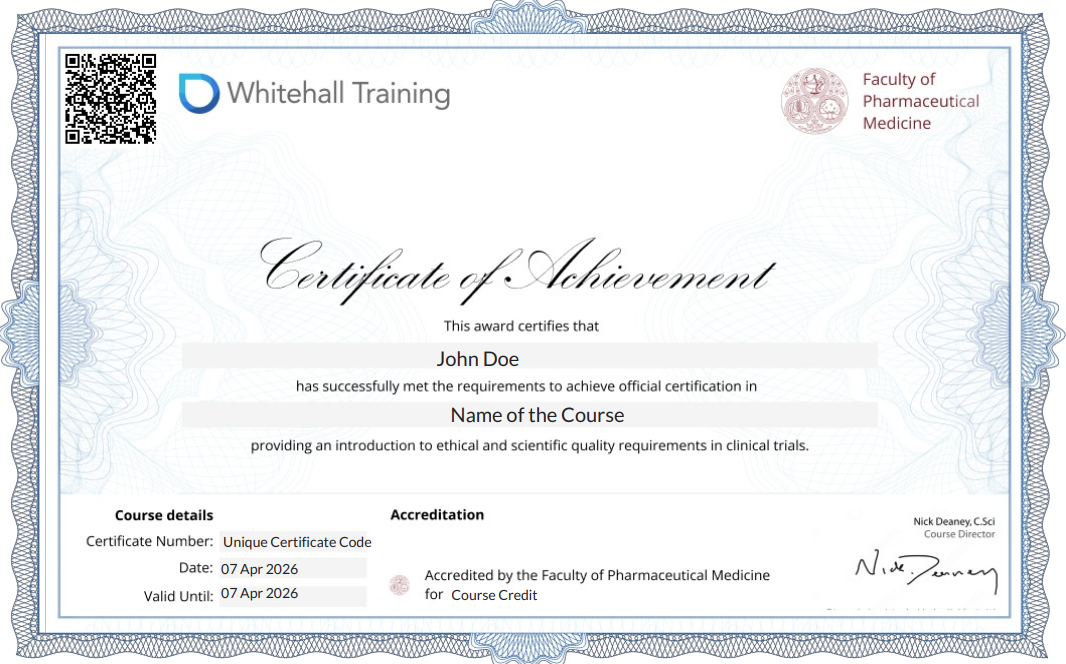
This course covers key CAPA concepts including deviation management, root cause analysis, CAPA planning, implementation, effectiveness checks, and documentation practices. It also emphasizes Good Clinical Practice (GCP) compliance, audit and inspection readiness, and risk-based quality improvement to prevent recurrence of issues. Upon completion, learners receive a certification demonstrating competency in CAPA processes.
This course covers key CAPA concepts including deviation management, root cause analysis, CAPA planning, implementation, effectiveness checks, and documentation practices. It also emphasizes Good Clinical Practice (GCP) compliance, audit and inspection readiness, and risk-based quality improvement to prevent recurrence of issues. Upon completion, learners receive a certification demonstrating competency in CAPA processes.
Understand the fundamentals of CAPA, including definitions, core concepts, and the relationship between corrective and preventive actions.
Gain knowledge of regulatory requirements, including FDA 21 CFR Part 820.100, and why CAPA systems are essential in regulated industries.
Learn the end-to-end 7-step CAPA process, from identifying nonconformities and root cause analysis to implementation, verification, and closure.
Develop practical skills in documenting CAPA activities, ensuring effectiveness, and supporting continuous quality improvement and compliance.





This course is ideal for individuals who want to begin or advance a career in clinical research, including: